
I used to think camping lunches had to be basic and kind of boring. No fridge usually meant crushed sandwiches or endless snack bars. Honestly, even a couple of days eating like that made me feel tired and less excited about the trip.
So I started looking deeper into shelf stable foods that are actually satisfying. I tested different combinations, carried them on hikes, and paid attention to what stayed fresh and tasted good. That small effort completely changed how I plan my outdoor meals now.
This blog is not random suggestions. I researched carefully, studied different packing methods, and used my own camping experience to build this list. Every idea here is practical and realistic. There is real effort behind this guide, so make sure you read until the end. You will definately love this.
🔥 Estimate how many calories you need per day (try for free)Daily Calorie Calculator
1. Tuna and Cracker Plates
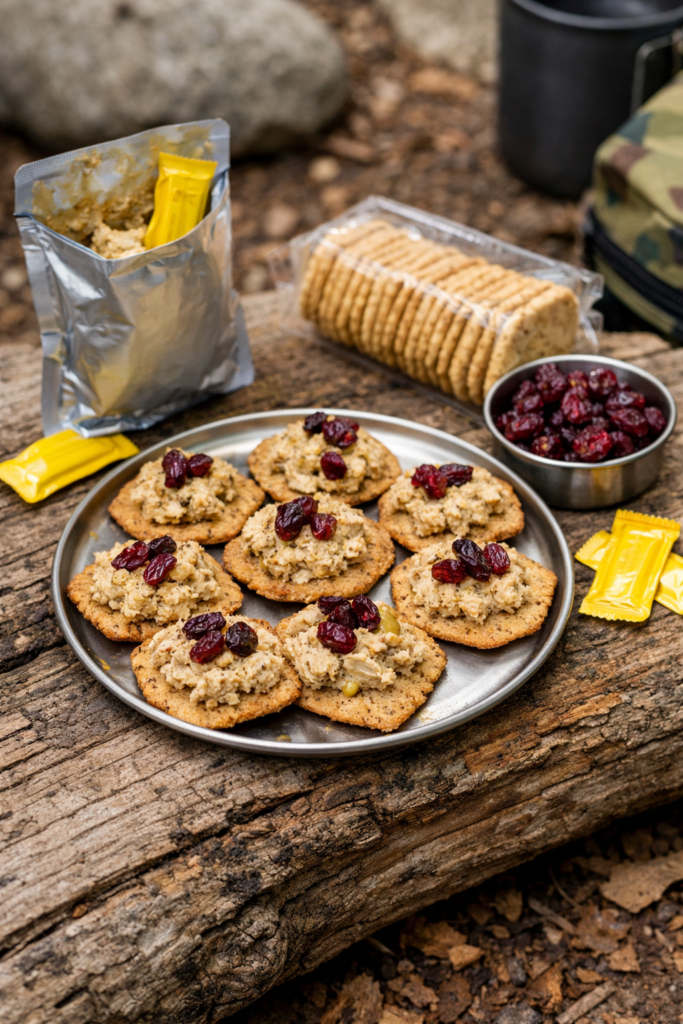
Tuna pouches are a camper’s best friend because they are flat, lightweight, and require zero draining. I think the flavored versions, like lemon pepper or spicy Thai, are a high-quality way to get a lot of protein without carrying extra spice jars.
Ingredients Needed:
-
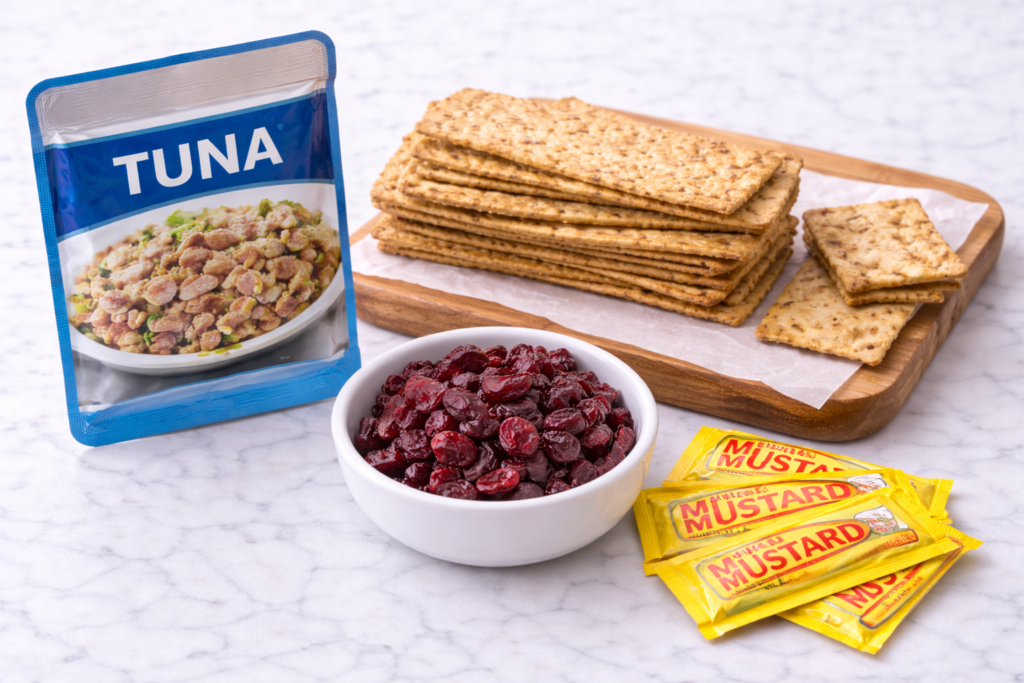
One foil pouch of tuna
-
One sleeve of sturdy whole-grain crackers
-
A handful of dried cranberries
-
Single-serve mustard packets
How to Prepare:
Open the tuna pouch and mix in a bit of mustard directly in the bag. This creates a creamy texture and adds a sharp flavor that pairs perfectly with the savory fish.
Scoop the tuna onto the crackers one by one. Using crackers instead of bread prevents the meal from becoming soggy or smashed in your backpack during a long trek.
Top each cracker with a few dried cranberries. The sweetness of the fruit balances the saltiness of the tuna for a very balanced and happy midday bite.
Enjoy this meal sitting on a log or a rock. It is a very effective way to get high-quality protein and healthy fats without needing a single piece of silverware.
2. Peanut Butter and Apple Wraps
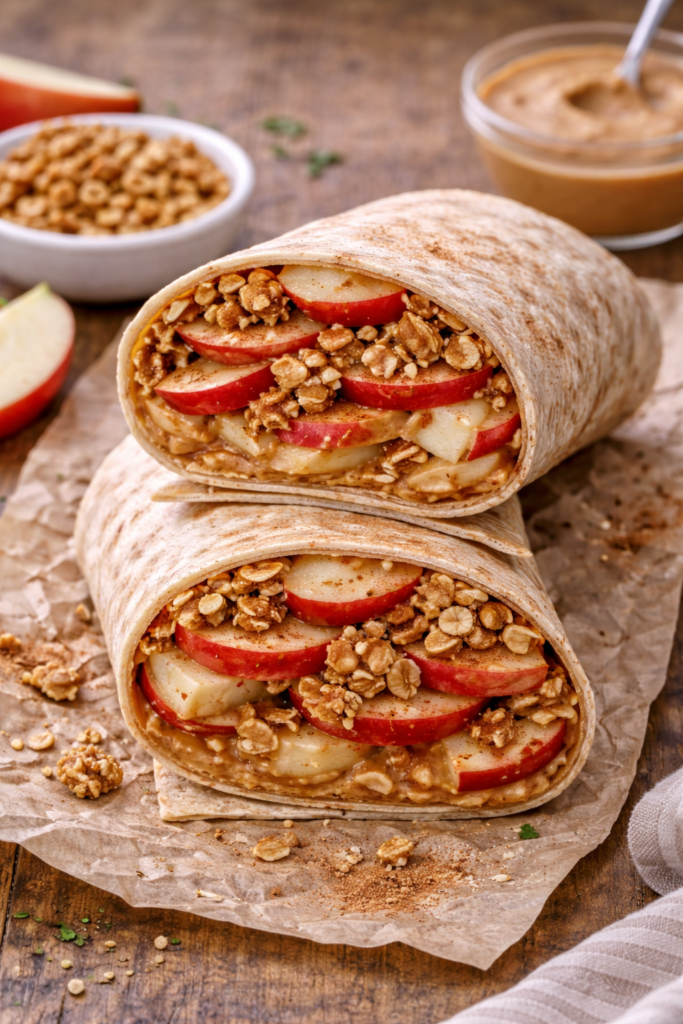
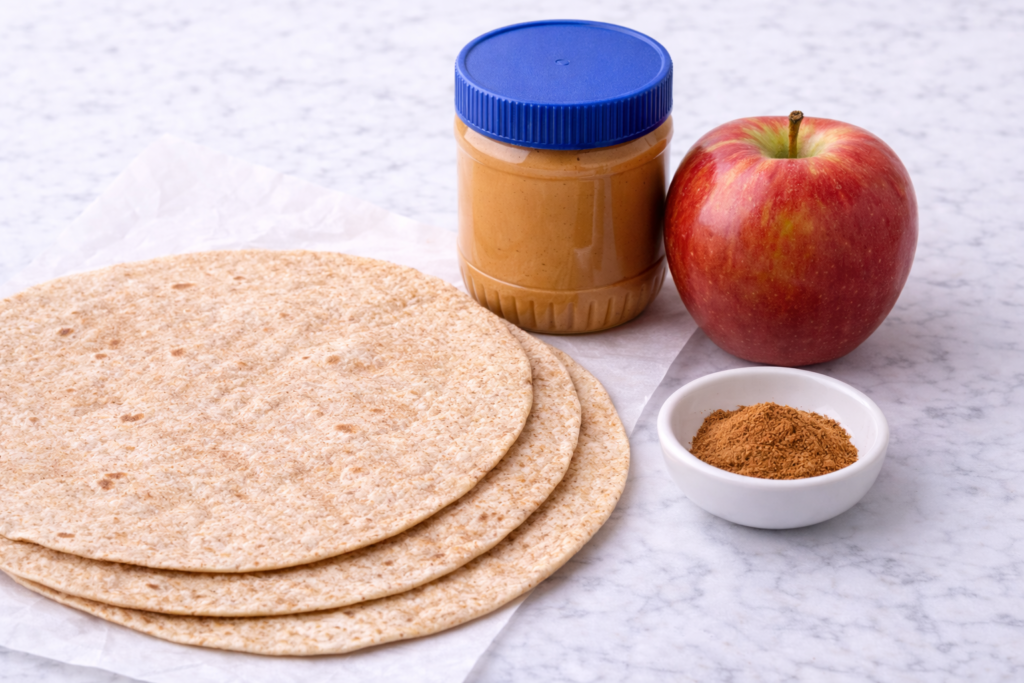
This is a classic combination that provides a steady stream of energy thanks to the healthy fats and natural sugars. I recommend using a firm apple like a Granny Smith because it can survive a few days in a pack without bruising.
Ingredients Needed:
-
Two whole-wheat tortillas
-
One small jar of peanut butter
-
One fresh apple
-
A sprinkle of cinnamon
How to Prepare:
Spread a thick layer of peanut butter over the surface of the tortillas. This serves as a high-calorie base that will keep you moving through your afternoon activities.
Thinly slice the apple and lay the pieces over the peanut butter. Leaving the skin on the apple adds extra fiber and a nice crunch to every single bite.
Dust the fruit with a little bit of cinnamon if you have it. This simple addition makes the wrap feel like a high-quality treat rather than just a basic trail snack.
Roll the tortillas up tightly and enjoy. This is a very smart way to stay hydrated and energized without ever needing to light a stove or open a cooler.
3. Pesto Bean Salad
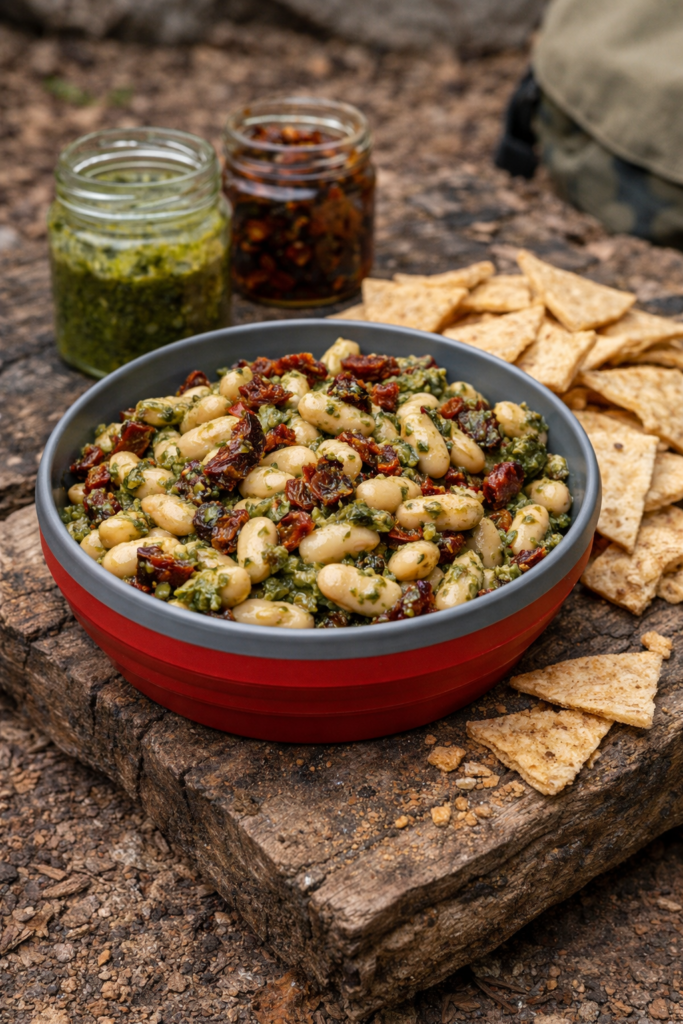
Canned beans are incredibly shelf-stable and provide a massive amount of fiber to keep your digestion on track while traveling. I find that using sun-dried tomatoes in oil adds a rich, savory depth that mimics the taste of a fresh salad.
Ingredients Needed:
-
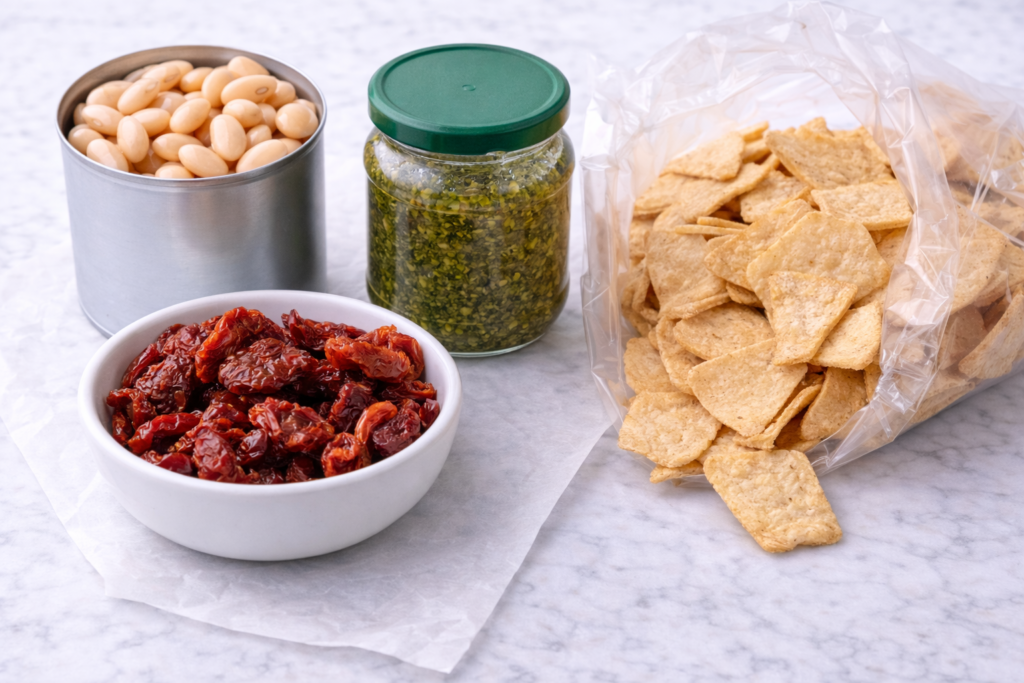
One can of white beans (rinsed)
-
One small jar of pesto
-
Half a cup of sun-dried tomatoes
-
A bag of dry pita chips
How to Prepare:
Drain the white beans and place them in a lightweight bowl. These beans are very creamy and absorb the flavors of the pesto much better than other varieties.
Stir in two tablespoons of pesto and the sun-dried tomatoes. The oil from the tomatoes acts as a natural dressing that stays fresh even in warmer temperatures.
Use the pita chips to scoop up the bean mixture. The crunch of the chips provides a high-quality contrast to the soft beans and oily pesto.
This meal is very filling and provides a sophisticated flavor profile. It is a very fresh and healthy choice for a slow afternoon at the campsite.
4. Sausage and Cheese Boards
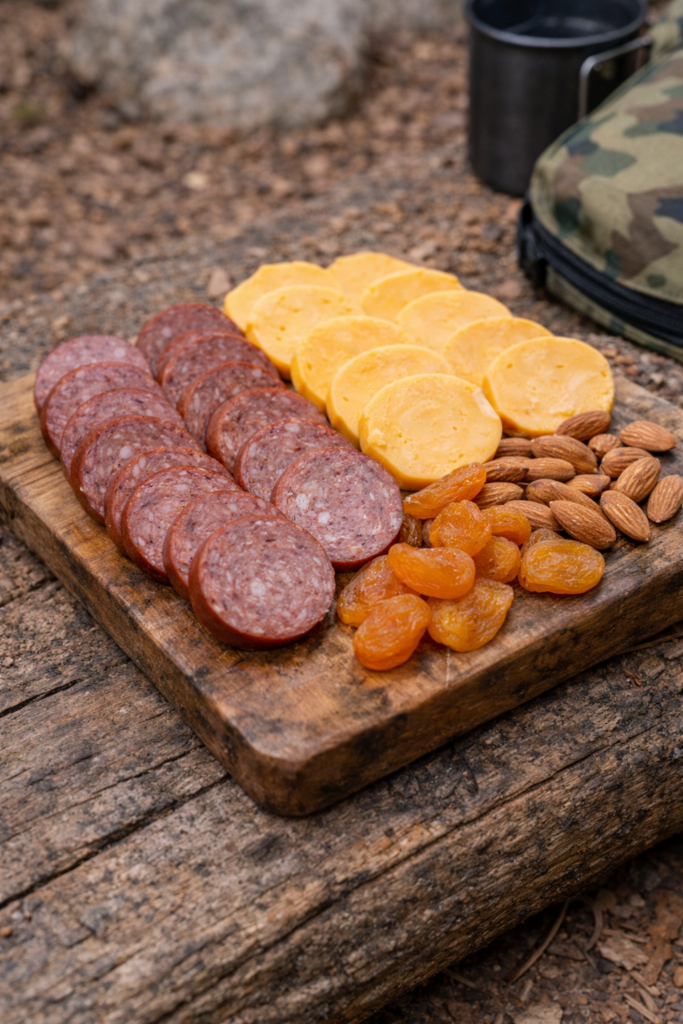
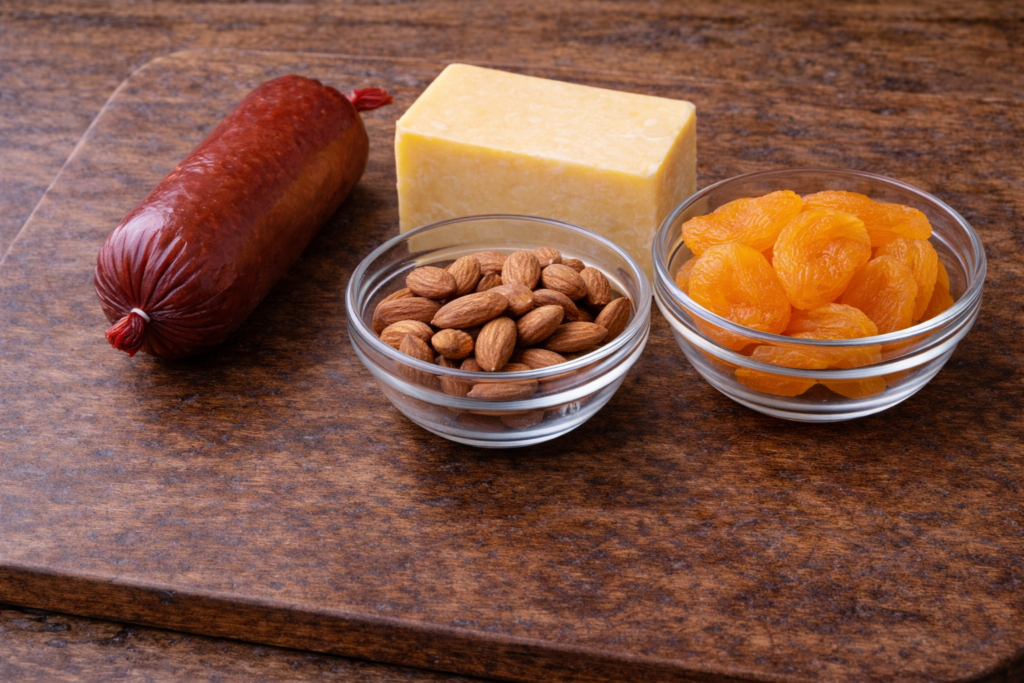
Summer sausage is specifically designed to stay shelf-stable for long periods without any cooling. I suggest pairing it with a hard cheese like aged cheddar or parmesan, which can easily handle a few days of camping heat.
Ingredients Needed:
-
One small summer sausage
-
A block of hard cheddar cheese
-
A handful of almonds
-
Dried apricots
How to Prepare:
Slice the sausage and cheese into bite-sized rounds. Harder cheeses have less moisture, which means they are much less likely to sweat or spoil than soft cheeses.
Arrange the meat and cheese with the almonds and apricots on a flat surface or a clean cloth. This creates a high-quality “charcuterie” feel in the middle of the woods.
The combination of salty meat and sweet fruit is very satisfying after a morning of physical activity. It provides a dense source of energy that is easy to digest.
This meal requires no cooking and very little cleanup. It is a very smart way to enjoy a substantial lunch while keeping your pack weight to a minimum.
5. Hummus and Veggie Pittas
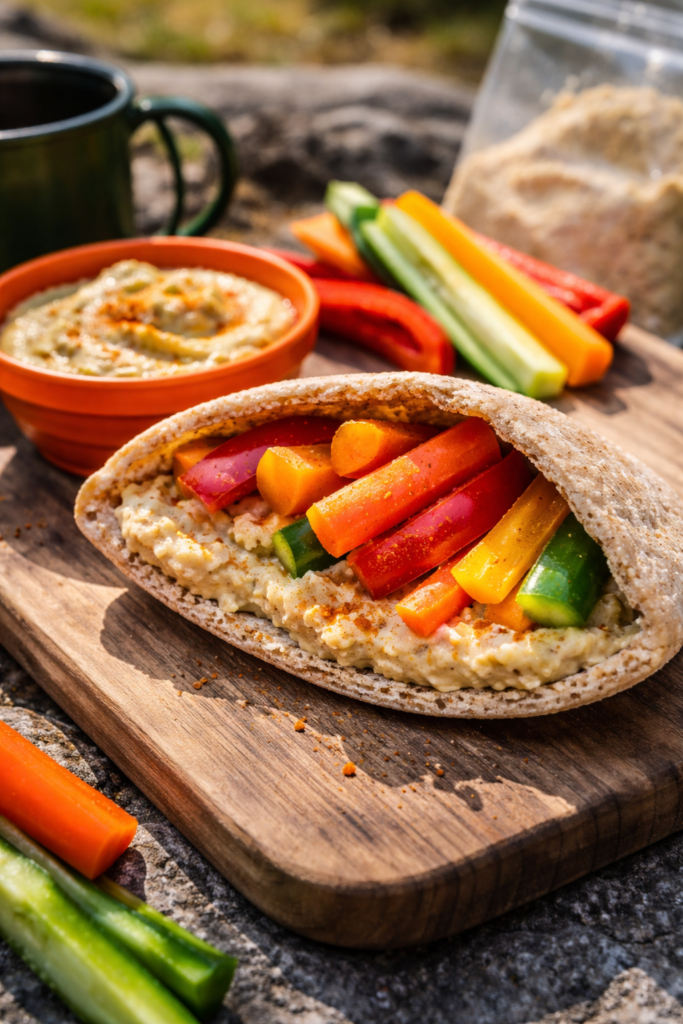
You can actually find powdered hummus that only requires a bit of water to become creamy and delicious. I believe that pairing this with hardy vegetables like carrots and bell peppers is a very fresh way to eat.
Ingredients Needed:
-
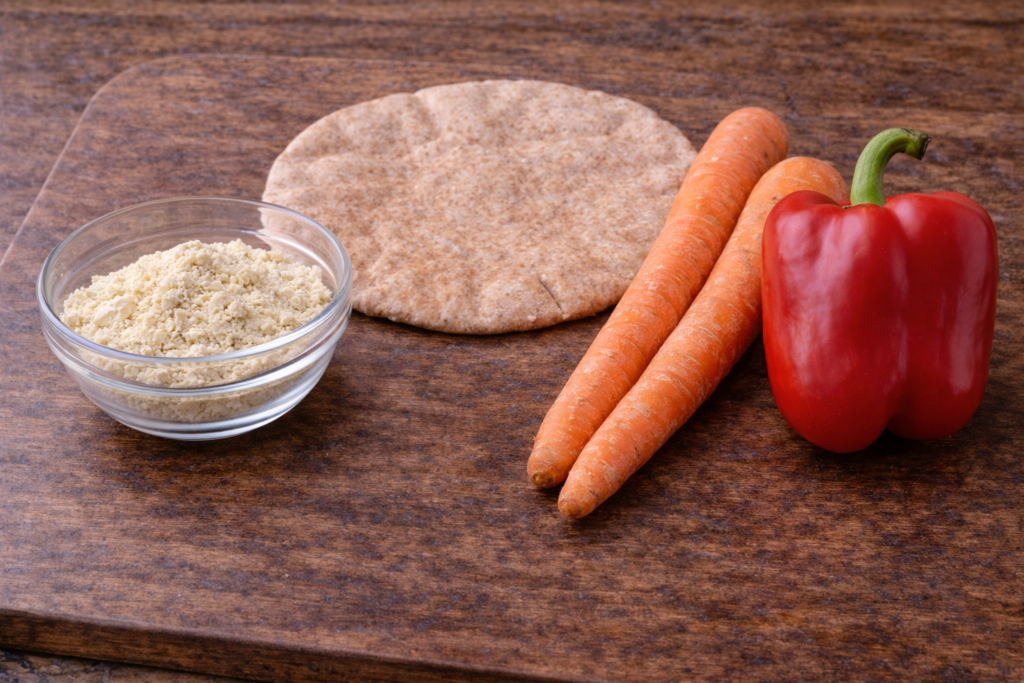
Half a cup of hummus powder
-
One whole-wheat pita bread
-
Two large carrots
-
One bell pepper
How to Prepare:
Mix the hummus powder with a small amount of filtered water until it reaches your desired thickness. This is a high-quality trick for lightweight backpacking.
Slice the carrots and peppers into long strips. These vegetables are very durable and will stay crisp for several days without being kept in a fridge.
Stuff the pita bread with a generous amount of hummus and the sliced veggies. The pita acts as a sturdy pocket that keeps all the ingredients together as you eat.
This lunch is very hydrating and provides a nice burst of vitamins. It is a very effective way to maintain a healthy diet while exploring the great outdoors.
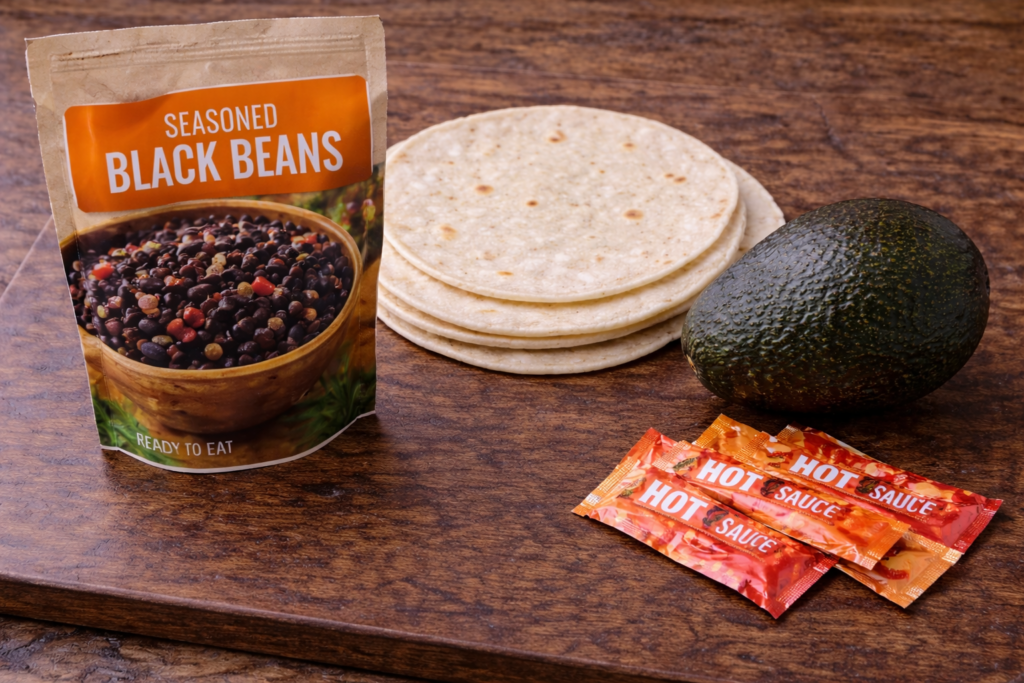
6. Black Bean and Avocado Tacos
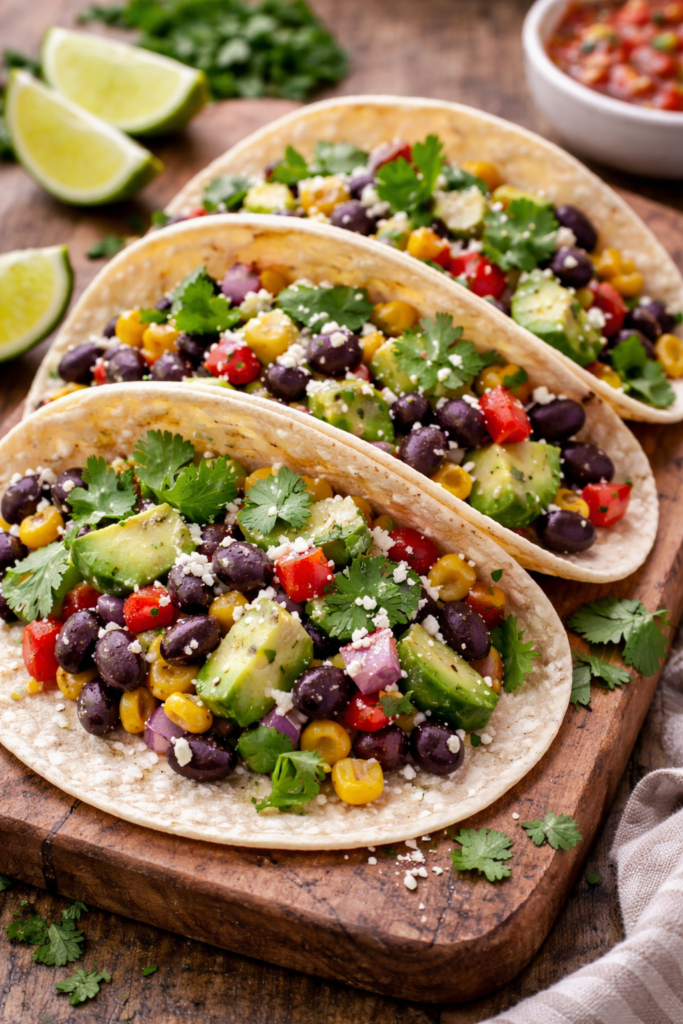
While most people think of avocado as fragile, a slightly under-ripe avocado can survive a day or two in a padded section of your pack. I find that black beans and lime juice create a very bright and happy meal.
Ingredients Needed:
-
One pouch of pre-seasoned black beans
-
Small corn tortillas
-
One firm avocado
-
A few packets of hot sauce
How to Prepare:
Place a few spoonfuls of the black beans onto the corn tortillas. These pouches are often shelf-stable and can be eaten cold or warmed by the sun.
Slice the avocado and place it on top of the beans. The creamy fat from the avocado makes the tacos feel very rich and high-quality.
Add a few drops of hot sauce for a spicy kick. This wakes up the flavors and makes the meal feel much more like a real dinner than a snack.
Fold the tortillas and enjoy your trail-side tacos. This is a very smart way to get a lot of flavor and nutrition without any complex gear.
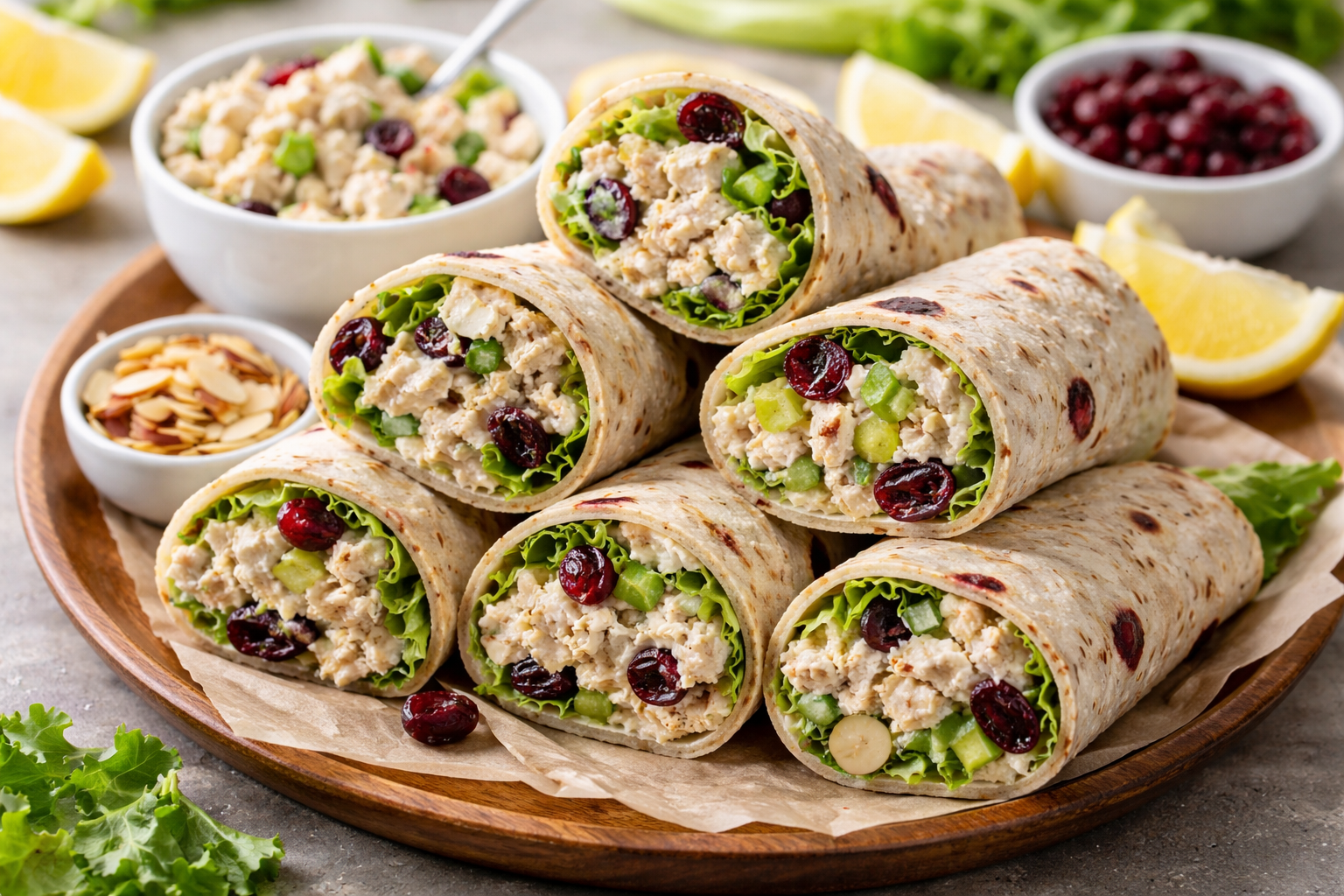
7. Chicken Salad and Cranberry Tortillas
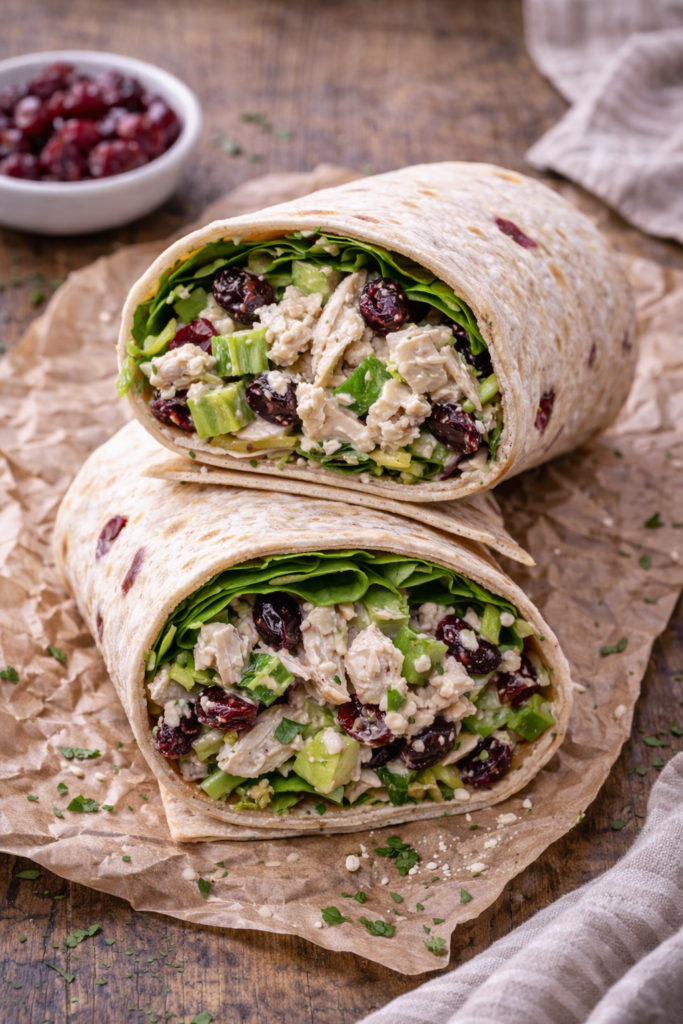
Canned or pouched chicken is a fantastic way to get lean protein without the mess of raw meat. I recommend using dried fruit and shelf-stable mayo packets to keep the texture creamy and interesting.
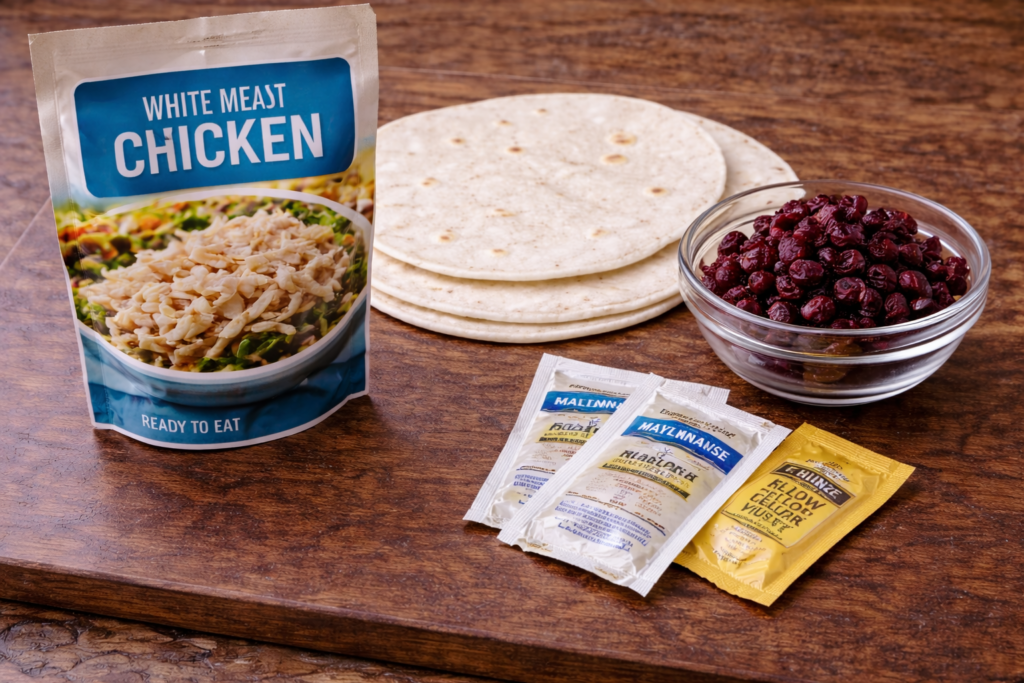
Ingredients Needed:
-
One pouch of white meat chicken
-
Two flour tortillas
-
One handful of dried cranberries
-
Two mayo and one mustard packet
How to Prepare:
Mix the chicken with the mayo and mustard packets inside the pouch. This saves you from having to wash a bowl and keeps the mess contained.
Stir in the dried cranberries for a sweet and chewy element. This is a high-quality way to add flavor and texture to a very basic protein source.
Spread the mixture onto the tortillas and roll them up tightly. The tortillas are much less likely to get crushed in your bag compared to traditional sliced bread.
This lunch is very satisfying and easy to eat while standing or walking. It is a very fresh and filling option for a quick midday break during your trip.
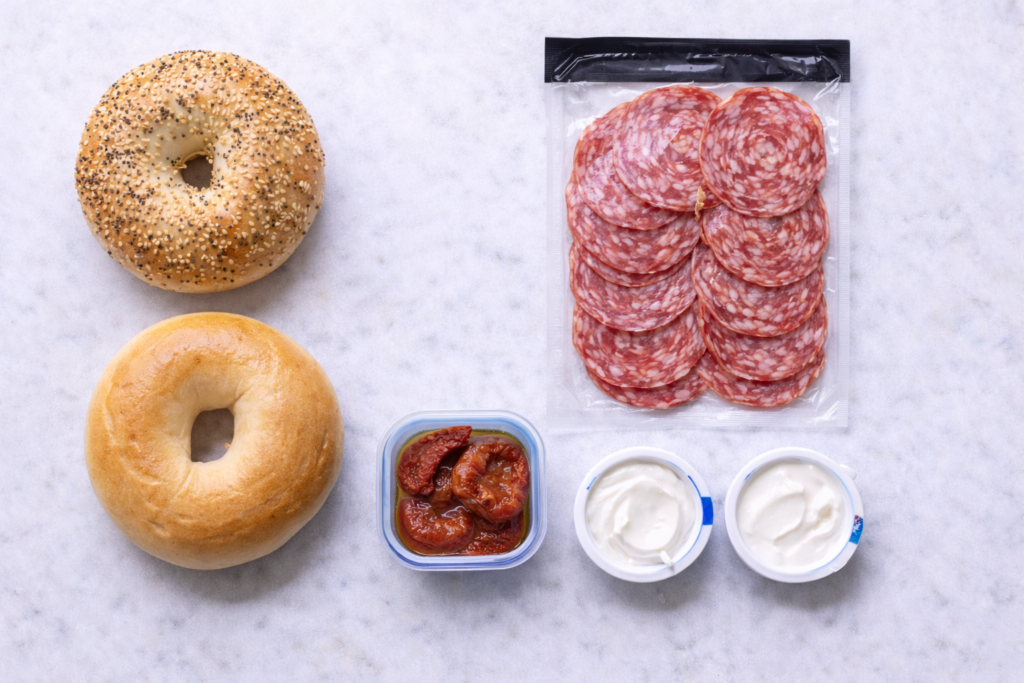
8. Sun-Dried Tomato and Salami Bagels
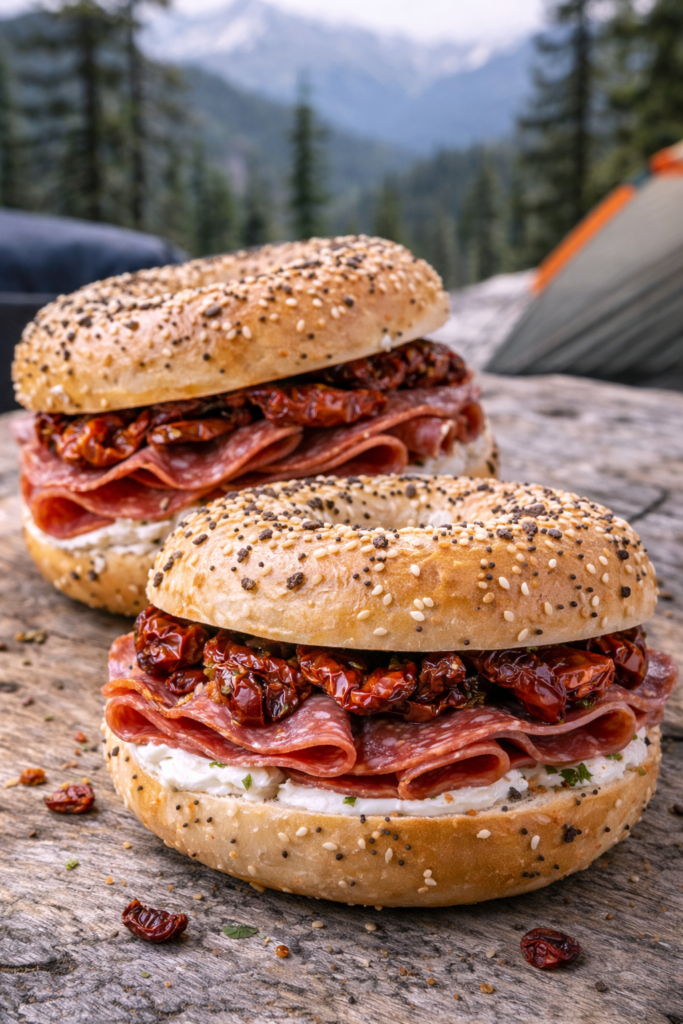
Bagels are a superior camping bread because their dense structure prevents them from being flattened in a crowded backpack. I believe pairing them with dry-cured salami creates a very high-quality, chewy, and savory lunch.
Ingredients Needed:
-
Two plain or everything bagels
-
One small pack of dry-cured salami (unopened)
-
Four sun-dried tomatoes in oil (carried in a small leak-proof container)
-
Two single-serve cream cheese or butter alternatives (if using within 24 hours)
How to Prepare:
Slice the bagels in half using a small camping knife. If you prefer a crunch, you can toast them over a quick morning fire, but they are just as delicious at room temperature.
Layer the salami slices generously over the bagel base. Dry-cured meats are shelf-stable because they have a low moisture content, making them a very smart protein choice for multi-day trips.
Top the meat with the sun-dried tomatoes. The oil from the tomatoes soaks into the bagel, providing a rich, herbal moisture that replaces the need for refrigerated condiments.
Press the halves together and enjoy. This is a very dense and satisfying meal that provides the long-lasting energy needed for a steep afternoon climb.
9. Mediterranean Quinoa Pouch Bowls
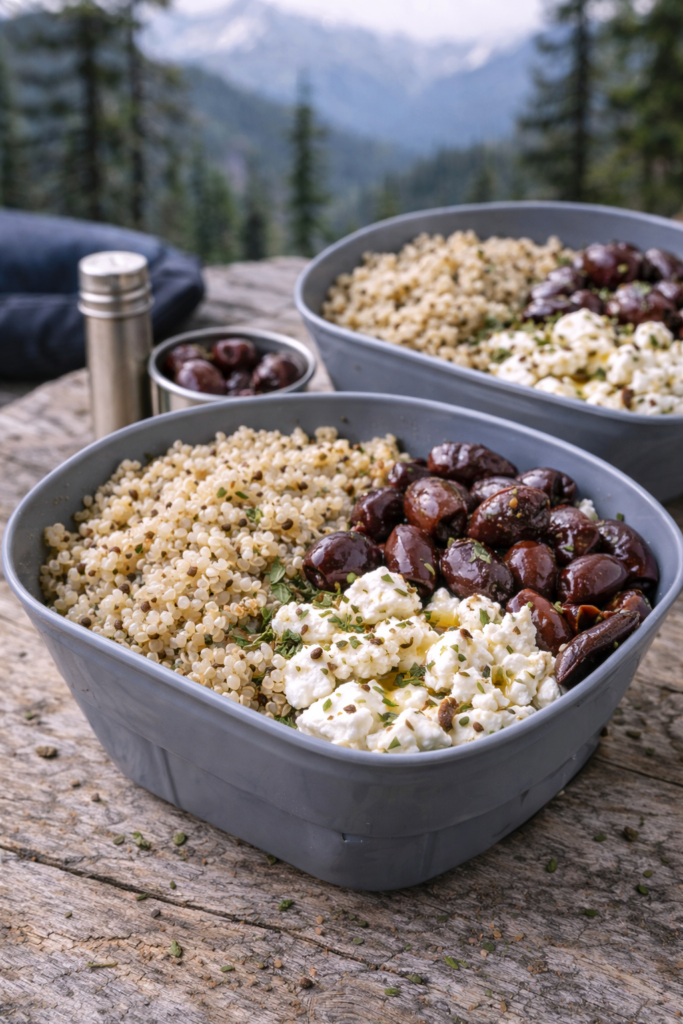
Many stores now sell pre-cooked, shelf-stable quinoa or grain pouches that can be eaten cold. I find that mixing these with salty olives creates a very fresh and sophisticated Mediterranean lunch in the middle of the wilderness.
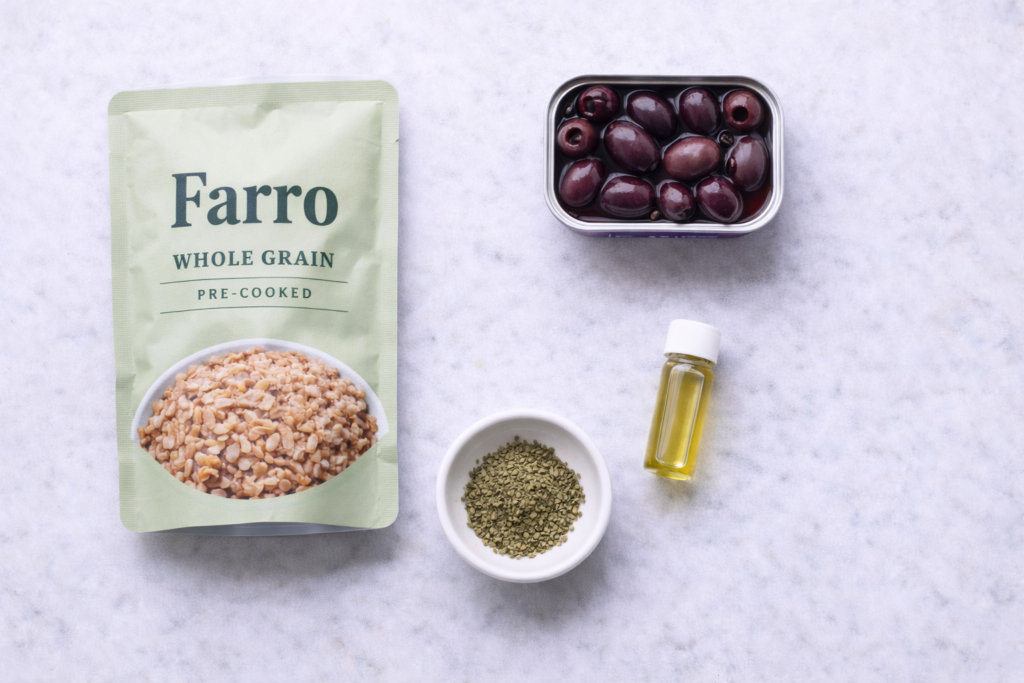
Ingredients Needed:
-
One pre-cooked quinoa or farro pouch
-
One small tin or pouch of pitted kalamata olives
-
One tablespoon of olive oil (from a small travel vial)
-
A pinch of dried oregano
How to Prepare:
Knead the quinoa pouch before opening to break up any clumps. Pour the grains into a lightweight camping bowl or eat them directly from the bag to save on cleanup.
Stir in the olives and the olive oil. The oil adds essential healthy fats and ensures the grains have a silky, high-quality texture.
Sprinkle the dried oregano over the top. This simple herb adds a professional, aromatic touch that makes a pre-packaged meal feel like it was prepared in a kitchen.
This lunch is packed with complete proteins and complex carbohydrates. It is a very effective way to stay fueled without the heavy weight of canned goods.
10. Spicy Lentil and Naan Wraps
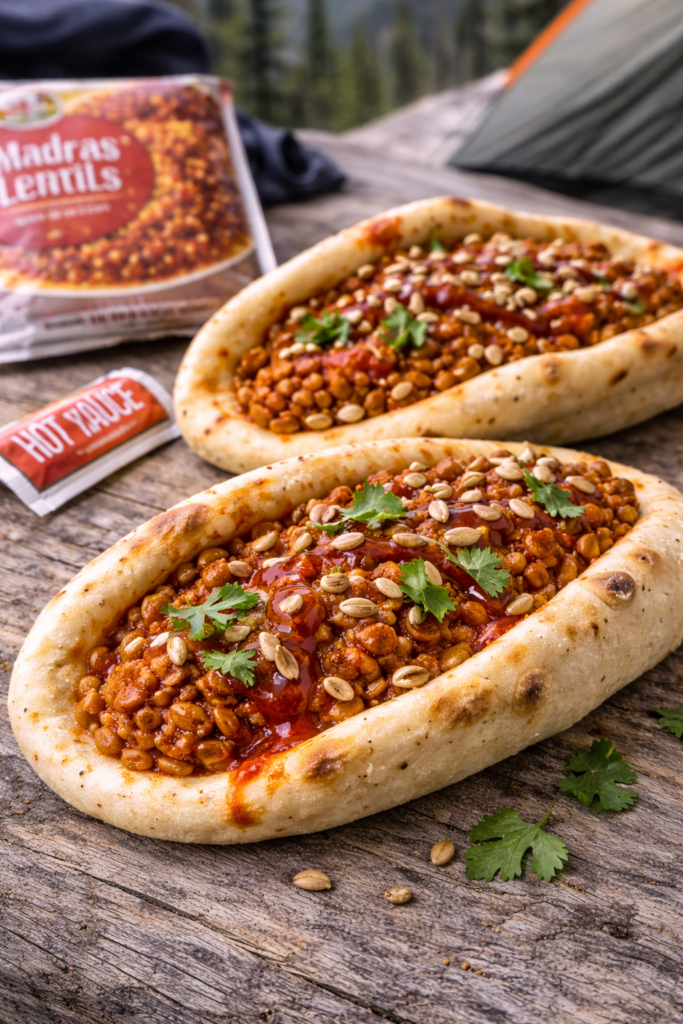
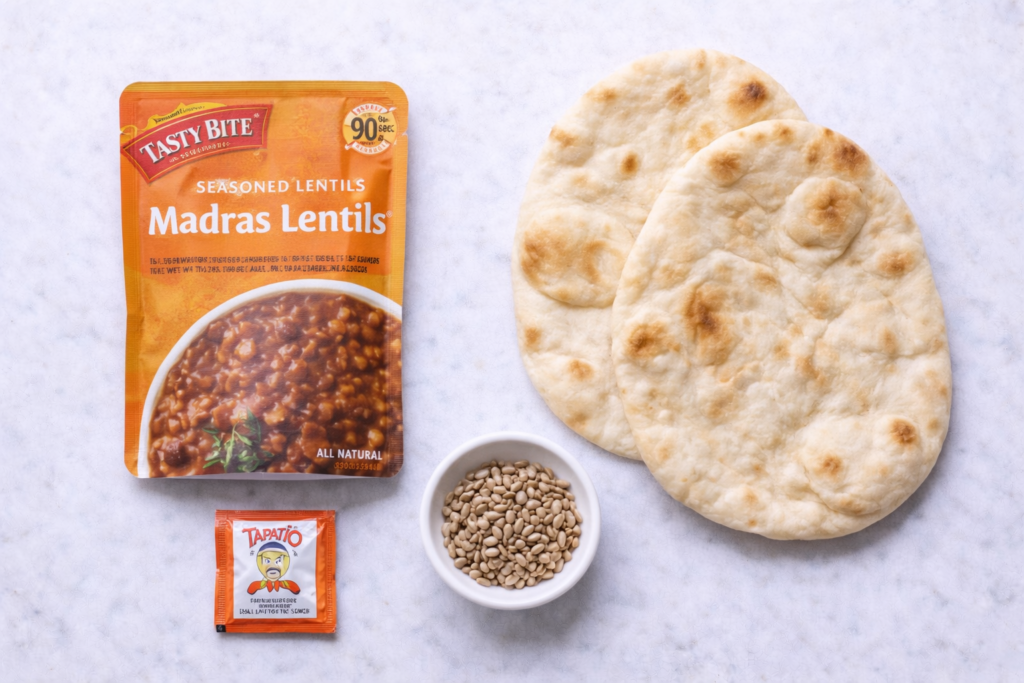
Lentils are a nutritional powerhouse for campers. You can find pre-seasoned lentil pouches (often found in the Indian food section) that are completely shelf-stable and bursting with flavor.
Ingredients Needed:
-
One pouch of seasoned lentils (Madras Lentils or similar)
-
Two pieces of plain naan or flatbread
-
One small packet of shelf-stable hot sauce
-
A handful of roasted sunflower seeds
How to Prepare:
Open the lentil pouch and spread the contents onto the center of the naan. These lentils are thick and hearty, so they stay in place better than a soup or a watery bean dish.
Drizzle the hot sauce over the lentils for an extra kick. This is a very happy way to wake up your palate during a long day of trekking.
Sprinkle the sunflower seeds over the mixture for a much-needed crunch. This adds a layer of texture that makes the soft lentils and chewy bread feel much more balanced.
Fold the naan like a taco and enjoy. This meal is very filling and provides a high-quality, warm-tasting flavor profile even when served at ambient temperature.
Frequently Asked Questions
1. How do I know if my food is safe without a fridge?
A. I suggest sticking to items specifically labeled as “shelf-stable” or “vacuum-packed.” Hard cheeses, cured meats, and dried fruits are also very safe choices that can handle ambient temperatures for several days without any issues.
2. What is the best way to carry these lunch items?
A. I believe that using a dry bag or a small dedicated food sack is the most effective way to keep your lunch organized. Store the heavier items at the bottom and keep fragile things like tortillas or avocados near the top of your pack.
3. How do I manage trash at the campsite?
A. I recommend bringing a small reusable silicone bag to store all your empty tuna pouches and wrappers so you can dispose of them properly when you return home.
4. Can I still get enough calories without fresh meat?
A. Absolutely, nuts, seeds, nut butters, and beans are all very calorie-dense and provide plenty of energy for hiking. I find that these shelf-stable options often make me feel better during exercise than heavy, greasy cooked meals.
5. Is it possible to have “fresh” flavors without a fridge?
A. Yes, using items like fresh lime juice, dried herbs, or hardy vegetables like carrots and radishes can really brighten up your meal. These small additions provide a high-quality taste that makes your outdoor dining feel much more special.